
Cleanroom education
SMILE training tools
Semiconductor Manufacturing via Innovative Learning Experience
SMILE provides three levels of cleanroom training, from browser-based exploration to augmented reality guidance during a procedure. The tools are being adapted and tested for use in the Mines Nanofabrication Facility.
For more information and materials, visit Zafer Mutlu’s training resources.
Level 1 · Browser · Complete as of November 2026
Interactive videos
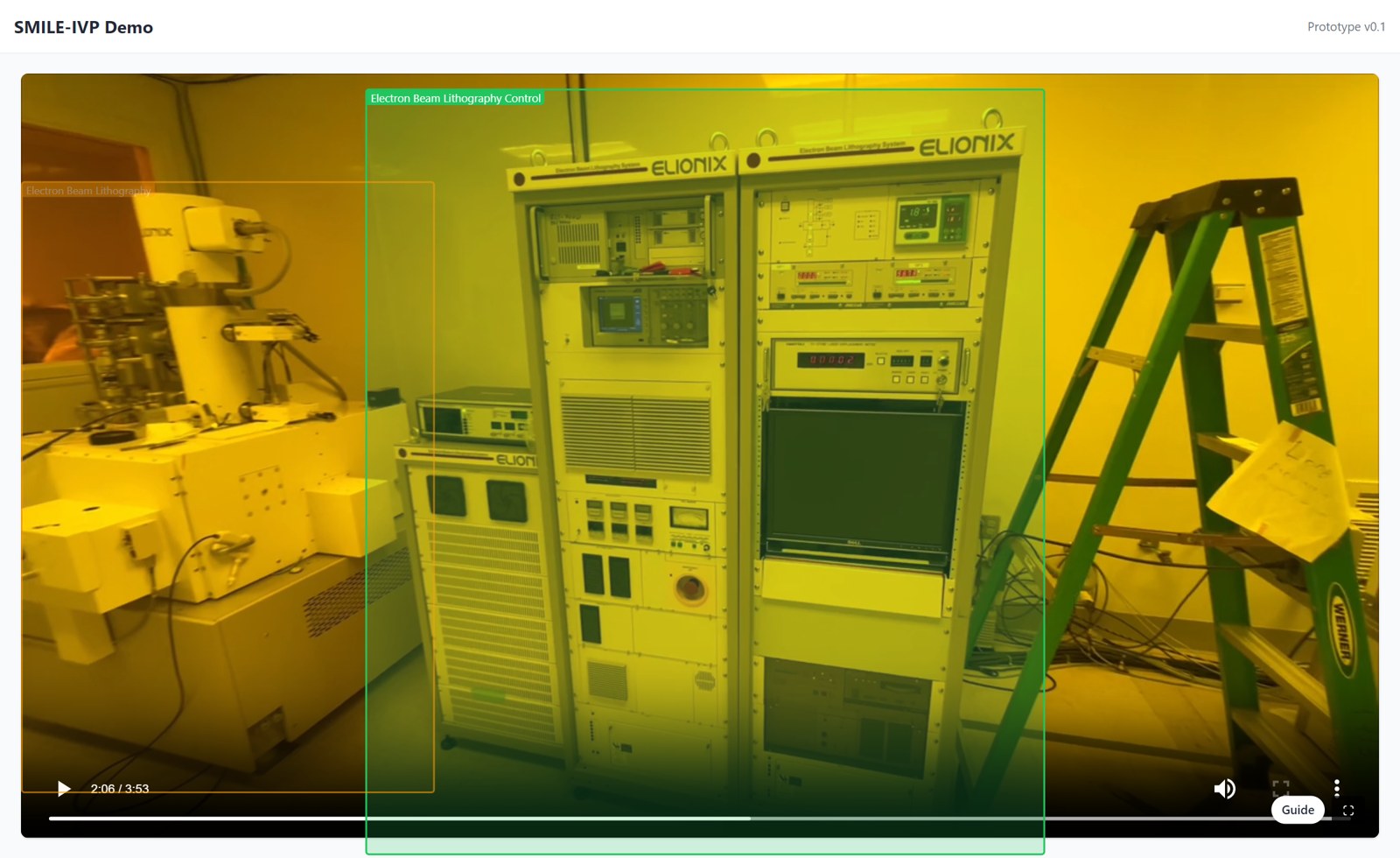
A neural network outlines and labels equipment in a cleanroom video. Selecting a tool opens its process description, photos, and components. The demo runs in a browser without a headset or app installation.
Level 2 · Browser or VR · Complete as of November 2026
360° cleanroom tour
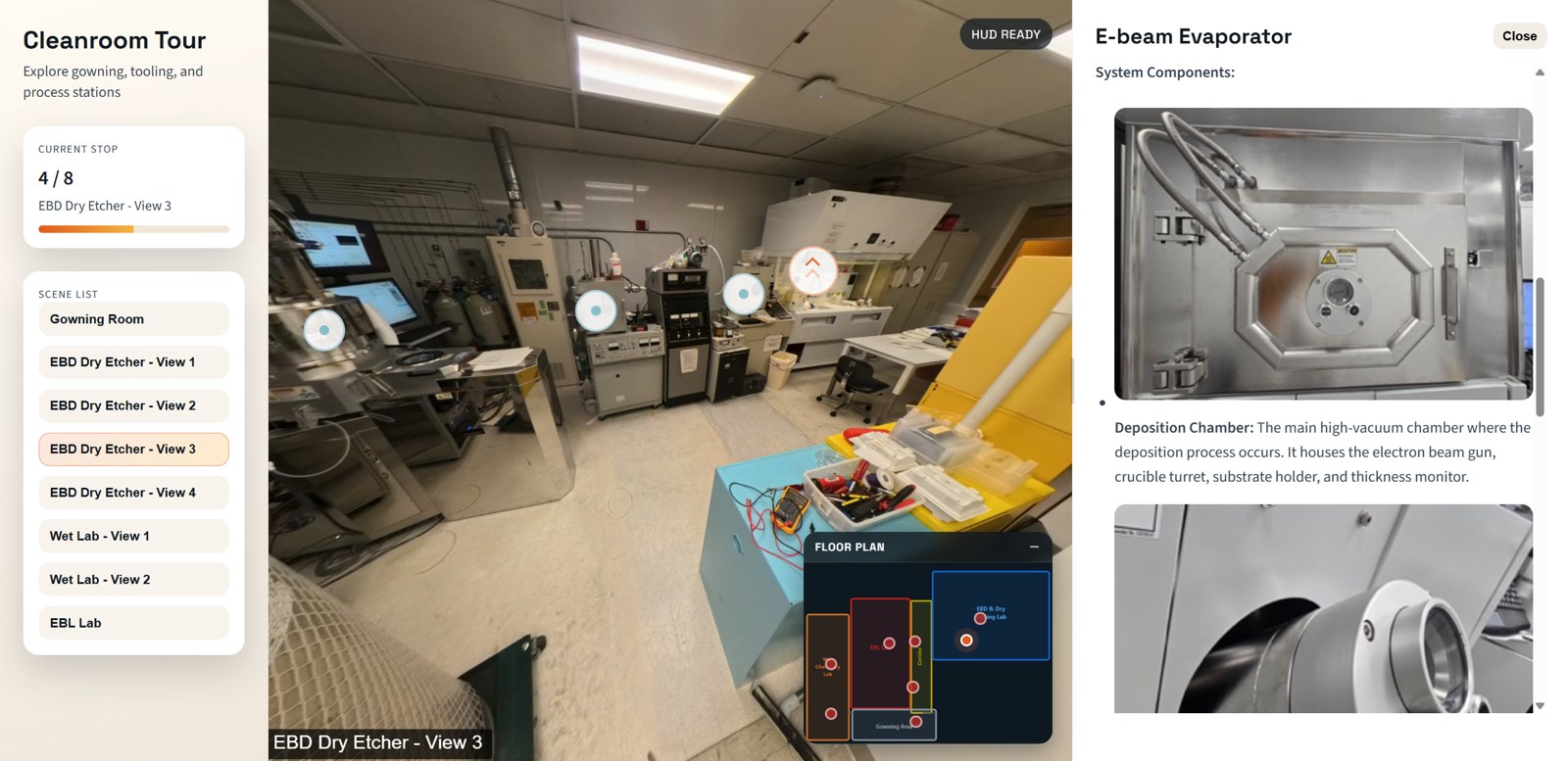
Explore a photo-mapped cleanroom with a floor plan and tool information panels. The tour is available in a regular browser and through WebXR on a Meta Quest 3 headset.
Level 3 · HoloLens 2 · Research system
AR cleanroom assistant (ARCA)
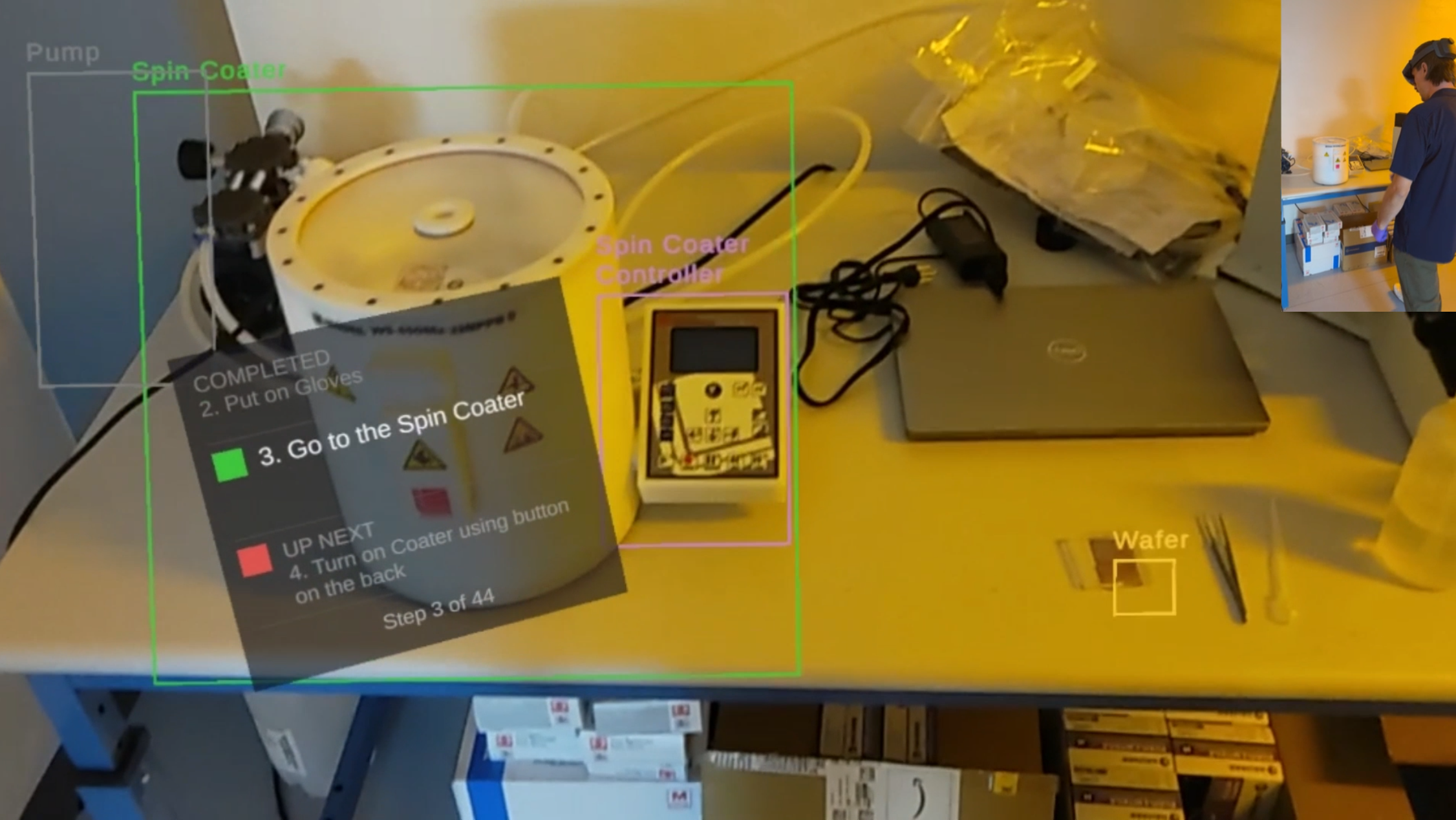
ARCA displays the current procedure step and outlines the equipment needed for it. Gaze interaction and virtual buttons let learners move through instructions and request help. The spin-coating demonstration guides a learner through a 44-step procedure.
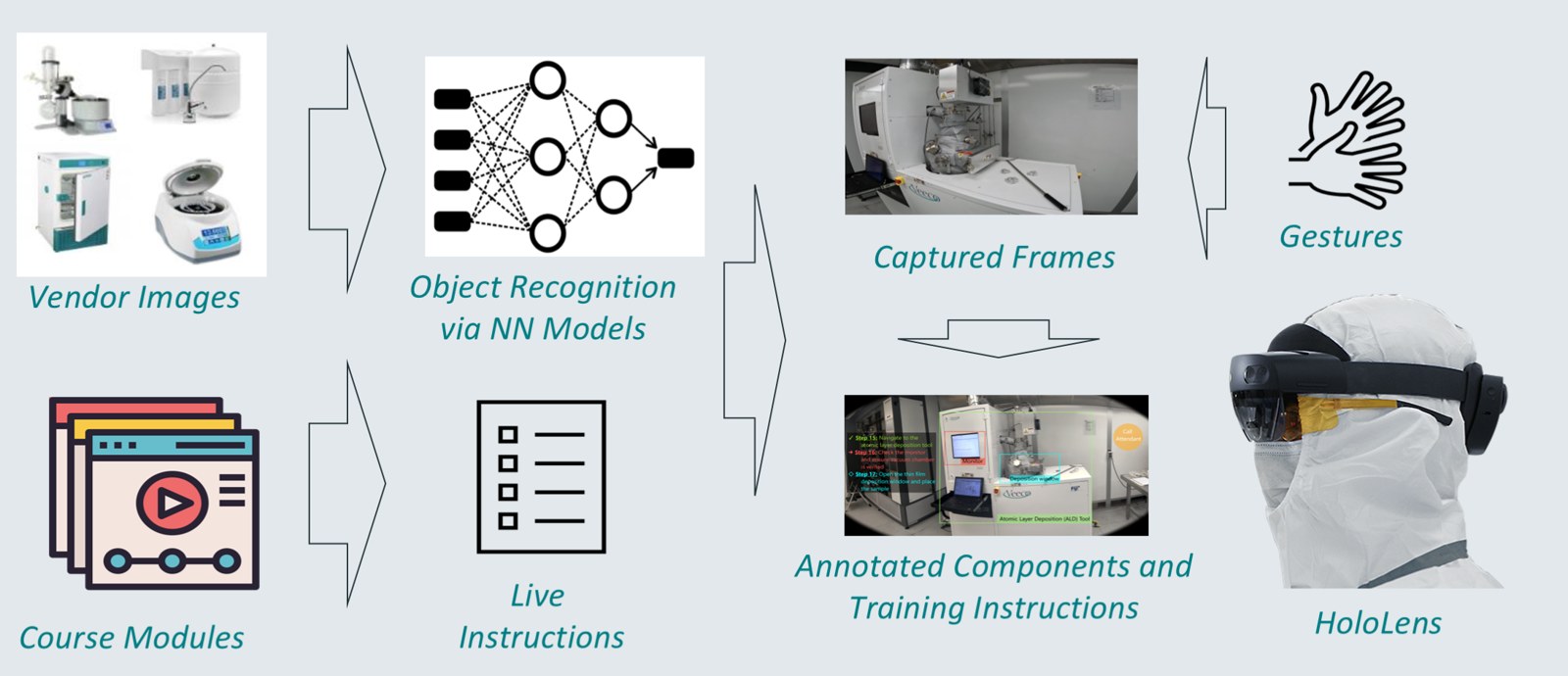
ARCA uses equipment detection rather than requiring a digital twin of the cleanroom. Contact the project team about the headset system and research collaboration.
Research in progress
The team is studying spatial awareness and verification of trainee actions. Current work combines hand-object detection with cleanroom tool detection to identify which object a hand holds or touches. Planned work includes depth, eye tracking, spatial maps, and procedure-step checks in ARCA.
Student research topics include reducing detection latency, moving models to edge devices, and evaluating the tools with cleanroom trainees.
People and support
SMILE is led by project PI Zafer Mutlu (University of Arizona). Other project investigators include Mehmet E. Belviranli (Colorado School of Mines) and B. Kim (University of Arizona). SMILE is funded by the DoD Microelectronics Commons through the ASU SWAP Hub. Its integration into CoRtEx is part of the NNME Southwest effort.